

Publications
Cohen-Solal Lyne

Cohen-Solal Lyne, With intelligence and talent at their fingertips: fashion, an industry of creativity and a driver of growth, Ministry of Culture and Communication, Directorate-General for Artistic Creation, Arts and Crafts, February–October 2015
‘Does fashion still exist?’ one of the sector’s recognised gurus and oracles recently asked aloud.
It is difficult to dismiss this question or to respond to it by rushing headlong into this study. This question continues to strike such a chord amongst professionals that we must pause to consider it.
Fashion, that diverse discipline ranging from haute couture to everyday clothing, which perpetually oscillates between art and commodity, cannot die insofar as it is a cultural language. It has overcome many crises by adapting, by bridging the past and the future, and by anticipating societal upheavals; it will continue to look ahead to shape our future.
However, in the world of fashion – a world of subtle magic and intense labour, of emotion, vision and talent – not all these elements are on an equal footing in the face of the brutality of our globalised economy.
Faced with the challenges of globalised markets, the social realities of the fashion industry, and at a time when we are all being asked to consider the future of our planet, the French fashion industry must shoulder its responsibilities and encourage professionals to rise to the challenge of creativity together.
A sustained collective effort, demanding adjustments and flexibility at every level seem essential if our country is to retain its role as the ‘home’ of fashion. So, yes, fashion exists because it is creation, without end…
Quality, respect and creativity, but also solidarity and foresight, emerge as essential guiding principles in this in-depth reflection on the future of this sector, which encompasses art, industry, culture, innovation, luxury and everyday life, as well as both the collective and the personal for each and every one of us.
To immerse oneself enthusiastically in the fashion industry in order to get a better feel for its atmosphere and understand it, to meet its various players and listen to them speak passionately about their work – this is to grasp and encounter, quite naturally, a portrait of contemporary society with all its contradictions.
With modesty, I am attempting to capture this in photographs and put forward a few realistic proposals for the short and medium term, with three objectives in mind: national ambition, solidarity, growth and employment. France certainly loves its fashion; it must take pride in it and do a better job of promoting its talents, its productive capacities and its potential.
Click on this link to access the publications of the Directorate-General for Artistic Creation
Fauque Claude
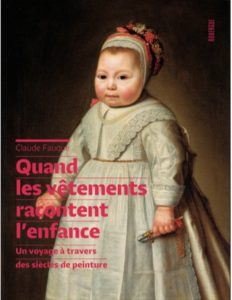
Claude Fauque, When Clothes Tell the Story of Childhood: A Journey Through Centuries of Painting, Éditions du Rouergue, 2017, 176 pp.
In this history of children’s clothing as depicted in Western painting, Claude Fauque reveals the place that European societies, from the Middle Ages to the twentieth century, accorded to childhood – from the infant, protected yet also shaped by often relentless swaddling, to older children regarded as nothing more or less than little adults. Whilst certain items of clothing remained constant for centuries – such as the bodysuit, the bonnet or the apron – and whilst dresses were long worn by both boys and girls, certain conventions varied according to the era or social class.
Through the works of the greatest painters, we see the child grow: an infant in swaddling clothes, a toddler reaching walking age clad in padded garments and frills, boys trading the dress for a doublet and breeches, and girls dressed in crinolines. But we also see families changing – whether aristocratic, bourgeois or peasant – and children gradually acquiring a status in their own right. From the 19th century onwards, the emergence of children’s fashion, combined with the revolution in knitwear and baby clothes, would free the bodies of the very young from the constraints of the past and accompany the advent of our modern societies.
Click on this link to visit Éditions du Rouergue
Gallot Fanny
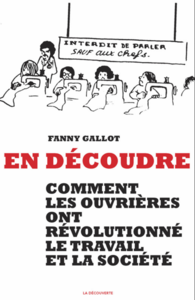
Gallot, Fanny (ed.), En découdre: How Women Workers Revolutionised Work and Society, Paris, Éditions La Découverte, 2016
Whilst since the late 1990s the working class has returned to the forefront with increasingly fierce struggles (occupations, lock-ins, hunger strikes, threats to ‘blow up the factory’, etc.), the role played by women has been overlooked. Unlike men, they have often spent their entire careers in the same factory and bear the full brunt of restructuring or outright liquidation. Who are these women determined to ‘fight to the bitter end’? Having started work after 1968, they have little in common with their mothers: they are neither fatalistic nor resigned. Thanks to their struggles, new laws have revolutionised the world of work and, more broadly, society. They secured recognition as fully-fledged employees, rather than as subordinates who had to make do with a supplementary wage. They challenged the power of petty bosses who enjoyed a virtual right of sexual exploitation. They restored dignity to factory work, which had previously been considered degrading for a woman. They transformed the way trade unions operated by refusing to delegate everything to men. Trade unions were forced to address issues such as contraception, abortion and the sharing of domestic responsibilities.
Fanny Gallot drew, amongst other things, on the detailed accounts of the women involved in this slow and profound revolution. She recounts their surprising and moving stories, such as those of the female workers at Chantelle and Moulinex, whose struggles made the headlines.
Jonke Philipp

Jonke Philipp, Mass-Produced Fashion in Berlin (1880–1914), Presses Universitaires du Septentrion, 2025, 226 pp.
Studying Berlin fashion around 1900 means examining one of the earliest mass-production industries in the clothing sector and the material and visual culture surrounding its commercialization.
Berlin, the capital of the fledgling Wilhelmine Empire, established itself at the turn of the 20th century as the undisputed center of fashion in Germany. The success of Berlin fashion did not rest on the ateliers of haute couture designers, but on an industry that produced and sold mass-produced clothing in standardized sizes (ready-to-wear) to a bourgeois clientele and the middle classes. Exploring Berlin’s ready-to-wear industry means discovering a chapter of fashion history that remains little known in France.
An analysis of the material and visual culture of this sector provides insight into the logic behind a clothing production system aimed at selling fashion at a lower cost and helps us understand the business strategies of stores that are no longer in existence today. Many Berlin retailers that were renowned at the time contributed to this fashion culture through their store layouts, window displays, advertisements, and fashion shows, leading to social changes in fashion.
Click on this link to access Presses Universitaires du Septentrion
Legrand Catherine
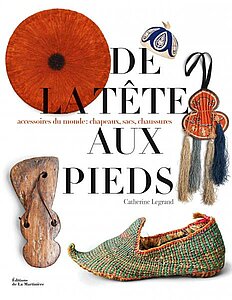
Legrand, Catherine, From Head to Toe: Accessories from Around the World: Bags, Hats, Shoes, Paris, Éditions de La Martinière, 2017, 240 pp.
Ever since she made her first handbag in 1977 for her clothing brand À la bonne renommée, Catherine Legrand has never lost her interest in accessories. Driven by a nostalgia for the trinkets of the past and a fascination with the immense richness of ethnic accessories, she hunts for bargains, collects, travels, and notes down all the details that define the elegance of an outfit and the uniqueness of a person, whether here or elsewhere.
This fourth book on textiles and fashion takes readers on a global tour of accessories, from Japan to Peru, via Madagascar, Finland and China, serving as an inexhaustible source of inspiration, a catalogue of forms and craftsmanship, and an invitation to dream…
Click on this link to visit Éditions de La Martinière
You can find out more about this publication by downloading the press pack (PDF, 1.1 MB)
Martini Manuela
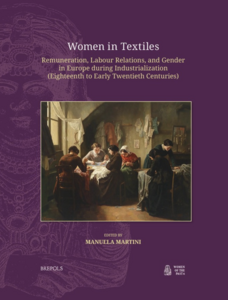
Martini, Manuela (ed.), *Women in Textiles: Remuneration, Labour Relations, and Gender in Europe during Industrialisation (18th to Early 20th Centuries)*, Brepols, 2026, 244 pp.
This volume examines gender dynamics within the world of work in the French and European textile industries, focusing on women’s economic roles both within the home and outside it. Whilst the presence of women in textile production is well documented, this collection explores in greater depth the structure of their pay, the division of labour between domestic and income-generating activities, and the organisation of working hours. By examining how working-class families balanced domestic responsibilities with paid work, the book reconstructs the composition of individual and household incomes across various textile trades, notably silk weaving, hosiery, lace-making and glove-making.
By combining original qualitative and quantitative sources with innovative methodologies drawn from the digital humanities, the authors offer a nuanced analysis of both normative frameworks and everyday practices. This book positions the household as a central unit of economic activity and social negotiation, revealing how gender has shaped access to work, the allocation of time and the valuation of labour. Through this interdisciplinary approach, the chapters collected here shed new light on the historical development of wage systems and the lived experiences of working-class women in Europe from the 18th to the early 20th century.
Click on this link to visit Éditions Brepols
Nicklas Charlotte, Pollen Annebella
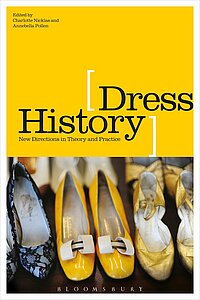
Nicklas Charlotte, Pollen Annebella (eds), Dress History. New Directions in Theory and Practice, Bloomsbury Academic, 2015, 248 pp.
The study of the history of clothing has grown exponentially over the last twenty-five years, as members of the RIG’s special interest group are well aware. Once regarded as marginal and frivolous, this discipline has seen a generation of researchers and curators strive to counter such criticisms through rigorous research into all aspects of the production, circulation and consumption of clothing. The University of Brighton has played a key role in shaping these debates through teaching, conferences and publications. A new book, edited by two Brighton professors, further enriches this field and asserts that the history of clothing has now come of age.
Presenting the latest research, *Dress History: New Directions in Theory and Practice*, co-edited by Charlotte Nicklas and Annebella Pollen, brings together twelve authors who, through their respective case studies, reflect on the methods and practices of dress research and interpretation, and how the study of clothing can contribute to our understanding of the world. Featuring a wide international range of established names and emerging voices, this volume showcases original work that closely examines clothing objects and images. The chapters cover a period from the 18th century to the present day, drawing on sources from around the globe. Much of this work helps to uncover hidden and little-known histories, as expressed through clothing. One of the key developments in recent dress studies is the shift away from a primary focus on the clothing of the European and North American elite. Some of the most exciting current research examines the clothes worn by ordinary people, as well as those marginalized by mainstream society. The chapters in Dress History address these groups, from 19th-century Afro-Brazilian women to mid-20th-century gay men. The once-outdated combination of socks and sandals and the sartorial choices of rural housewives receive as much attention as that given to the great couturiers and collectors, from Norman Hartnell to Isabella Stewart Gardner.
This book also pays tribute to the legacy of Professor Lou Taylor in this field. Any discussion of this area must acknowledge her contribution; this book is no exception. With a background in fashion design and a career spanning almost half a century in research, conservation, teaching, and writing, Taylor’s contributions to clothing history research have had a considerable influence on several generations of scholars, including those who benefited directly from her teaching (the editors of Dress History) and those who consulted her many publications (all the contributors to this volume). Taylor has written a moving personal foreword for this book, and the cover image features pieces from the Dress History Teaching Collection at the University of Brighton. This practical resource, built up by Taylor over decades of dedicated collecting and preservation, is designed to give students a firsthand experience of examining garments in real-world settings. As the book's central image, the patent leather pumps of the 1960s and the gilt ballroom slippers of the interwar period also embody the book's interest in clothing as it is worn and experienced. These worn shoes are imbued with stories and fantasies, but, like the best research, they remain grounded in reality.
Véron-Denise Danièle

Véron-Denise Danièle (ed.), Fur and Plumage: When Animals Take on Fabric, Proceedings of the Study Days of the French Association for the Study of Textiles (Moulins, National Center for Stage Costume, November 21 and 22, 2014), Sépia and AFET, 2015, 154 pp.
The publication of the proceedings of the study days on the theme of feathers and fur allows us to share the latest research on the subject: the diversification of the use of these materials over time, their production and trade, the codes of use as well as the symbolism and psycho-social values conveyed. Feathers and fur, so intimately linked to textiles, have inspired imitation and forgery. These aspects are also addressed.
Click on this link to access the Sépia and AFET publications.