Exhibition — “A Wardrobe of One’s Own: Dissident Femininities in the 19th Century”
— 26 September 2026–14 February 2027
From 26 September 2026 to 14 February 2027 At the Palais Galliera, Paris Fashion Museum, 10 Avenue Pierre Ier de Serbie, Paris
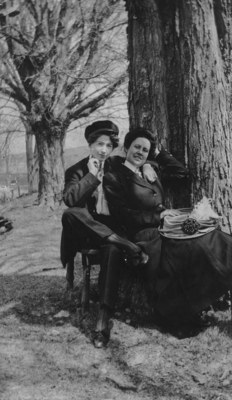
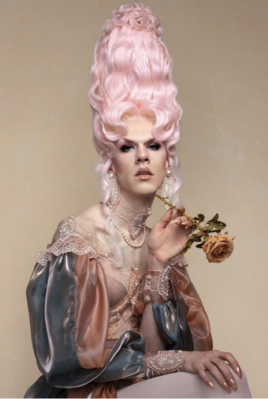
This autumn, the Palais Galliera presents the exhibition ‘A Wardrobe of One’s Own. Dissident Femininities in the 19th Century’, shedding light on a phenomenon that remains largely unknown: the adoption by 19th-century women of the masculine dress codes of their time. Conceived as a response to the often normative approaches to femininity in fashion exhibitions, ‘A Wardrobe of One’s Own. Dissident Feminities in the 19th Century aims to fill a significant gap in the history of fashion. The exhibition reveals how the increasingly pronounced adoption of men’s sartorial codes went hand in hand with a desire for profound change in the place of women in 19th-century society, particularly in France and the Anglo-Saxon world…
Chief Curator: Émilie Hammen, Director of the Palais Galliera Scientific Curator: Marine Kisiel, Heritage Curator, Head of the 19th-century fashion collections at the Palais Galliera Scientific Advisor: Marta Franceschini, Scientific Adviso
Exhibition — “Sublimating Fabric, at the Fourvière Museum: Liturgical Vestments and Fashion”
— 17 September 2026–3 January 2027
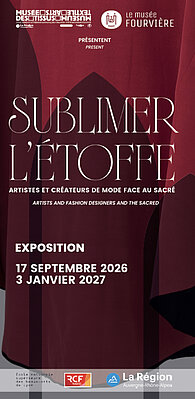
From 17 September 2026 to 3 January 2027 Musée de Fourvière, 7–8 Place de Fourvière, Lyon
Co-produced with the Musée de Fourvière in Lyon, the exhibition invites visitors to take a fresh look at the links between contemporary art, textiles and the sacred, through a selection of nearly thirty exceptional works.
Curators Aziza Gril-Mariotte, Director-General of the Musée des Tissus et des Arts décoratifs in Lyon, Professor of Art History at Aix-Marseille University and researcher at the UMR TELEMMe. Bernard Berthod, Curator of the Musée de Fourvière
Exhibitions — "Reflections on Fashion"
— From 16 September 2026…
From 16 September 2026 Kunstmuseum Den Haag, Stadhouderslaan 41, 2517 HV Den Haag, Pays-Bas
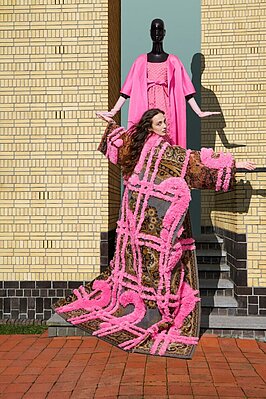
A rich, multifaceted and unexpectedly current 75 year old fashion collection To celebrate 75 years of their collection of fashion and costume, Kunstmuseum Den Haag opened its doors to an exhibition that transforms the museum’s treasures into a dynamic dialogue between past and present. Reflections on Fashion, running until January 3rd of 2027, showcases iconic designs from Iris van Herpen, Coco Chanel, Dior, Viktor & Rolf, and Hubert de Givenchy alongside hidden gems, all presented through fresh and unexpected perspectives.
Exhibitions — "Azzedine Alaïa and Africa"
— From 5 August 2026…
From 5 August 2026… Azzedine Alaïa Foundation, 18 rue de la Verrerie, Paris
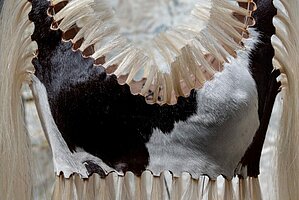
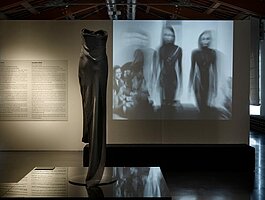
Azzedine Alaïa Foundation, 18 rue de la Verrerie, Paris July saw the opening of the exhibition Azzedine Alaïa and Africa, at the Azzedine Alaïa Foundation in Paris, exploring the perpetual influence of Africa in one of fashion’s most celebrated designers. The exhibition reveals how memories, landscapes, materials and cultural references from Africa inspired Alaïa’s creative vision throughout his work.
Exhibition — “Gianni Versace Retrospective”
— June 5th and throughout the summer of 2026
From June 5 to summer 2026 Musée Maillol, Paris
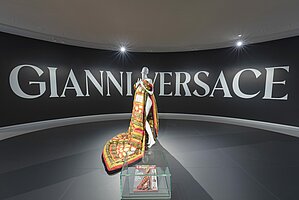
A flamboyant and visionary figure in international fashion, Gianni Versace left his mark on his era with a bold aesthetic that blended glamour, sensuality, and baroque opulence. From June 5 to summer 2026, Paris, the world capital of fashion, hosts the first major French retrospective dedicated to the designer since 1986 at the Musée Maillol. The Gianni Versace Retrospective brings together nearly 450 exceptional pieces: original creations and silhouettes, accessories, sketches, decorative objects, photographs, videos, and rare interviews offer a comprehensive overview of Gianni Versace's work.
Exhibition — "Marie Antoinette: From the Avant-Garde to the Forefront. Stage Costumes Created by Christian Lacroix"
— June 5 to November 2, 2026
From June 5 to November 2, 2026 At the Château de Fontainebleau
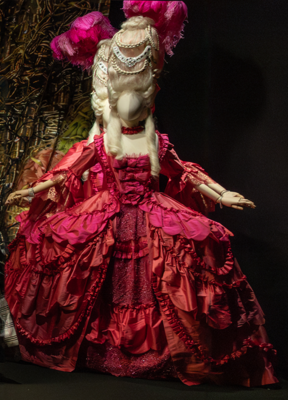
The Château de Fontainebleau, in partnership with the National Center for Stage Costume and the Opéra Comique, invites you to discover eleven stage costumes designed by Christian Lacroix for the opera *Le Postillon de Longjumeau*. Inspired by the elegance and audacity of Marie Antoinette, these creations offer a fresh perspective on the flamboyance of 18th-century fashion through the eyes of a contemporary couturier.
Exhibition — "Fashion Heritage on show in “Art & Fashion”"
— From 4 June 2026…
From 4 June 2026… MUDE–Museu do Design, R. Augusta 24, 1100-053 Lisboa, Portugal
Le directeur de MUDE–Museu do Design a parlé à l’EFHA du rôle du musée dans l’exposition « Art & Mode » au Musée Calouste Gulbenkian… Bárbara Coutinho, le directeur de MUDE–Museu do Design, réfléchit au rôle du musée dans l’exposition « Art & Mode », présentée au Musée Calouste Gulbenkian. MUDE a contribué avec 38 pièces de sa collection de mode et a travaillé en étroite collaboration avec le conservateur Eloy Martínez de la Pera Celada. Dans cette interview, Bárbara Coutinho discute de la collaboration entre les institutions, partage le travail de l’équipe de MUDE à travers la recherche, la sélection, l’installation et les processus de campagne photographique, l’importance d’inclure les concepteurs portugais et l’impact de l’exposition sur les visiteurs et le musée lui-même.
Exhibition — "New retrospective exploring the heritage of couture"
— all summer 2026
All Summer 2026 At Galerie Dior, 30 Avenue Montaigne, Paris
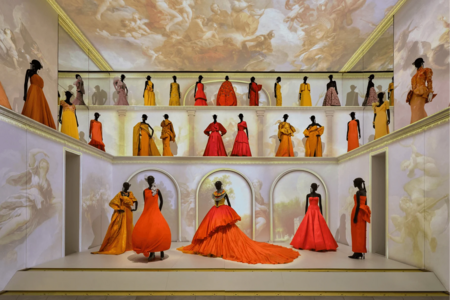
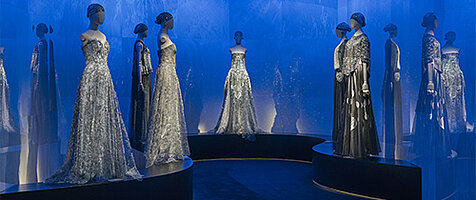
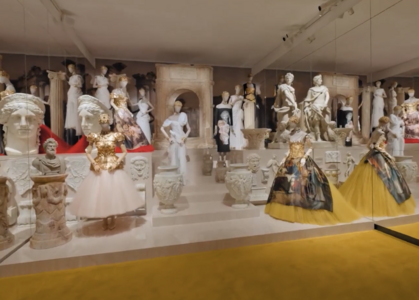
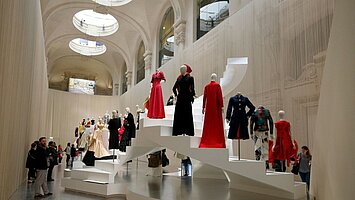
Currently on view in Paris, Galerie Dior presents a revamped retrospective tracing the history of the House of Dior from Christian Dior to the present day. Located at the iconic 30 Avenue Montaigne, it is among the most captivating exhibitions of Paris 2026, offering a richly layered journey through Dior's couture heritage across thirteen themed rooms. The exhibition revisits defining moments in the House's history while shedding new light on its ongoing evolution, including the vision of current Creative Director Jonathan Anderson. Among the must-see exhibitions in Paris in 2026, the retrospective brings together approximately 150 newly displayed garments alongside more than 100 photographs and archival documents, combining recently acquired pieces from the Dior Heritage Collections with highlights from the museum's permanent holdings. The presentation reveals how successive artistic directors have interpreted Dior’s signature vocabulary while remaining true to the founder’s original spirit. Couture Heritage Through Thirteen Themed Rooms. The exhibition guides visitors through thirteen galleries dedicated to central themes of Dior’s identity, including L’Allure Dior, the House’s fascination with gardens, the art of arches, and the enchanting Chambre des Merveilles. New sections highlight Diorling, the House’s influential ready-to-wear line, alongside displays devoted to Miss Dior and the history of Dior scarves, thus expanding the narrative beyond couture. For anyone exploring exhibitions in Paris 2026, this retrospective offers an intimate encounter with one of fashion’s most influential houses—a celebration of craftsmanship, creative continuity, and Dior’s enduring place in Parisian culture.
Exhibition — "Giorgio Armani Privé. 20 Years of Haute Couture"
— May 20–December 20, 2026
From May 20 to December 20, 2026 At the Armani/Silos Exhibition Space, Via Bergognone 40, Milan
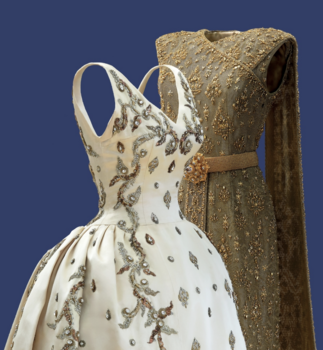
First presented in 2005 in Paris, the capital of haute couture, the Giorgio Armani Privé collection immediately emerged as a new expression of the Armani style, both complementary to and distinct from ready-to-wear, yet unified by the pursuit of a signature linear, elegant, and refined aesthetic. This exhibition brings Giorgio Armani Privé to Milan, the beating heart of the Armani universe, offering a chance to admire these creations up close and appreciate their exceptional craftsmanship. The collection stems from a vision of modern creativity, expressed in refined lines, precious materials and techniques, and jewel-like embroidery created by skilled hands. With haute couture, Giorgio Armani allows himself to experiment and imagine freely but never loses touch with reality, offering a surprising perspective on his style. He embraces new adventures, drawing inspiration from faraway places and atmospheres, crafting a serene and alluring look in a tale told in the present. Because when they are authentic, fashion creations are timeless.
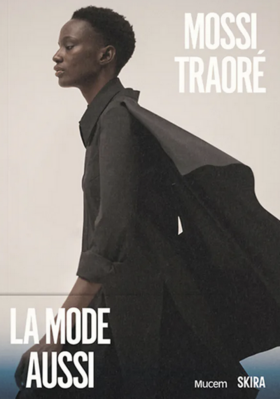
From May 20 to November 16, 2026 At the MUCEM, Marseille
Following the success of the "Fashion Folklore" exhibition presented in 2023, the Mucem is dedicating an exhibition to Mossi Traoré, an atypical figure on the French fashion scene for whom couture is simultaneously a field of experimentation, a tool for transmission, and a collective language. Trained both on the street and by the masters of couture, Mossi Traoré has developed a refined and socially conscious aesthetic. His approach, embodied in particular by his school, Les Ateliers Alix, named in homage to the haute couture designer Madame Grès, champions accessible yet demanding fashion, open to all. Conceived in close collaboration with the designer, "Mossi Traoré, Fashion Too" offers an immersion into a world where fashion engages in dialogue with popular culture, urban arts, and traditional craftsmanship. Sculptural silhouettes, videos, textiles interacting with the museum's collections, and artisanal demonstrations punctuate a partially immersive experience, inviting visitors to step into the reconstruction of Mossi Traoré's workshop and the Mucem's storage areas, encouraging them to touch the materials, listen, and feel.
Exhibition — "Memory is Home/Fashion & Memory"
— 14 May 26 to 31 January 2027
From 14 May 26 to 31 January 2027 Fashion Museum, Gasthuisstraat 11, 3500 Hasselt (Netherlands)
From 14 May, immerse yourself in the memories of Raf Simons, Olivier Rizzo, Hannelore Knuts, Inge Grognard and other leading figures, each with strong ties to Limburg. “Memory is Home” reveals previously untold stories and offers a unique insight into the lives and work of influential figures, both in the spotlight and behind the scenes of the fashion world. Explore themes such as nostalgia, movement and belonging, as well as a sense of community, and experience how fashion and memories intertwine.
Exhibition — "Fashion in all its majesty. Haute couture and tradition at the court of Thailand"
— May 13 to November 1, 2026
May 13 to November 1, 2026 Musée des Arts Décoratifs, 107 rue de Rivoli, Paris
The Musée des Arts Décoratifs presents a groundbreaking exhibition on the evolution of clothing at the Thai court, featuring pieces from the royal collection. Bringing together more than one hundred exceptional outfits and accessories, the exhibition showcases the royal wardrobes, highlighting the eight styles of traditional Thai costumes designed by Her Majesty Queen Sirikit in collaboration with a team of historians and local Thai designers. Furthermore, the exhibition illuminates the unique history of cultural and artistic dialogue, marked by more than thirty years of collaboration between Her Majesty Queen Sirikit and the fashion designer Pierre Balmain, and later continued with the Balmain and Lesage fashion houses.
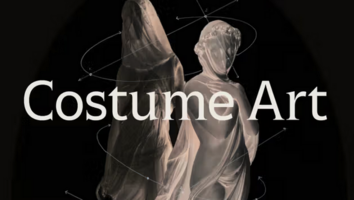
Exhibition — "Costume Art"
— May 10, 2026 – January 10, 2027
May 10, 2026–January 10, 2027 The Metropolitan Museum, New York (USA)
The Costume Institute’s spring 2026 exhibition explores representations of the clothed body across the Met’s vast collection, pairing garments with works of art to highlight the intrinsic relationship between clothing and the body. Primarily focused on Western art from prehistory to the present day, the “Costume Art” exhibition showcases the connections between clothing from the Costume Institute and objects from the museum’s other collections. The pairings of fashion and artworks will present a range of connections and experiences: from the formal to the conceptual, from the aesthetic to the political, from the individual to the universal, from the illustrative to the symbolic, and from the playful to the profound. These pairings are organized into a series of thematic body types that reflect their ubiquity and enduring presence across time and cultures. “Costume Art” is the inaugural exhibition in the new 1,100-square-meter galleries adjacent to the Great Hall. This space will host the Costume Institute’s annual spring exhibition and, from time to time, exhibitions from other curatorial departments of the museum, including those exploring the intersection of fashion and art.
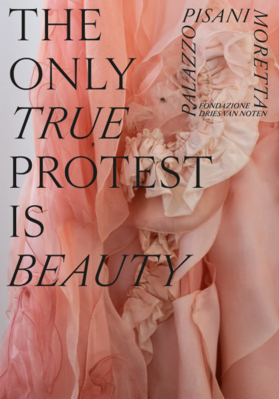
Exhibition — "The only true protest is beauty"
— April 25 to October 4, 2026
April 25 to October 4, 2026 Palazzo Pisani Moretta, Venice
An exploration of beauty as a charged encounter, capable of disrupting the familiar and making space for the unexpected. At the Palazzo Pisani Moretta, craftsmanship engages emotion and material inquiry in a constellation formed by mastery, in dialogue with the historic architecture that houses it. The works of diverse creatives converge in relation to one another, drawn together by affinity or maintained in productive contrast, revealing the human intensity of the making process. Here, creation becomes a practice of questioning, an experience of exchange, a field of possibility.
From April 18 to June 21, 2026 At the Calouste Gulbenkian Foundation, Lisbon, Portugal
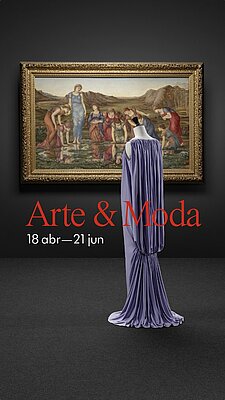
What connects Vivienne Westwood to 18th-century France, Guo Pei to an ancient Egyptian funerary mask, Balenciaga to an Assyrian bas-relief, or Alexander McQueen and Givenchy to Japanese prints? Art & Fashion invites visitors into a realm where art breathes fashion and fashion awakens art. In a sensory experience, artworks from the Gulbenkian Collection engage in a dialogue with the creativity of leading haute couture designers and contemporary designers, revealing how forms, symbols, and emotions travel through time. The exhibition stems from Calouste Sarkis Gulbenkian’s (1869–1955) profound interest in art and fashion and explores how the Gulbenkians have followed the trends of their era.
Exhibition — “Africa Fashion”
— March 31 – July 12, 2026
March 31 – July 12, 2026 Musée du quai Branly–Jacques Chirac
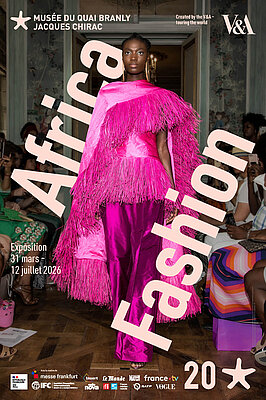
After captivating audiences in London, New York, Portland, Chicago, Melbourne, and Montreal, the exhibition “Africa Fashion,” conceived by the Victoria and Albert Museum in London, arrives in Paris, offering a dialogue between leading contemporary African fashion designers and the rich historical collections of the Musée du quai Branly – Jacques Chirac. This exhibition celebrates the meteoric rise of the African fashion scene, driven by a new generation of designers. Through inspiration and stylistic innovation, their creations celebrate a dynamic artistic scene as diverse as the continent itself. “Africa Fashion” presents African fashion as an art form that defines itself and reveals the richness and diversity of African histories and cultures. For this occasion, the museum highlights its extensive collection of African textiles, accessories, and jewelry, as well as a selection of photographs from its archives and those collected from the public. An international travelling exhibition created by the Victoria and Albert Museum, first held in London from 2 July 2022 to 16 April 2023, and subsequently touring the world.
Curator: Christine Checinska, Senior Curator of Textiles and Fashion from Africa and the African Diaspora, Victoria and Albert Museum, London
Exhibition — "18th Century Fashion: A Fantasized Heritage"
— March 14 to July 12, 2026
March 14 to July 12, 2026 Palais Galliera, 10 avenue Pierre 1er de Serbie, 75116 Paris
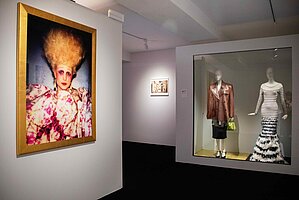
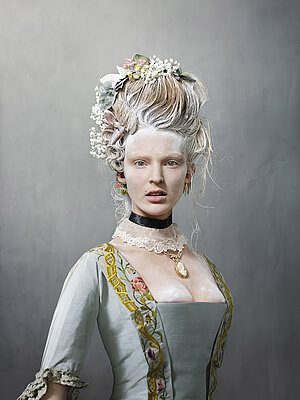
The Palais Galliera presents the exhibition "18th-Century Fashion: A Fantasized Heritage," showcasing the characteristics of women's fashion during the Age of Enlightenment and its numerous reinterpretations throughout fashion history to the present day. Often perceived as a distant, even dusty, century, the 18th century nevertheless represents a major turning point in the evolution of women's appearances, influencing the world of fashion and popular culture to this day. Marked by unprecedented creative effervescence, the 18th century is distinguished by the diversity of silhouettes, the richness of fabrics, and the exuberance of adornments and hairstyles. It also marks the end of a model of women's dress inherited from previous centuries, paving the way for a new conception of the body and appearance. From the Second Empire onward, women's fashion drew heavily on the aesthetics of the Enlightenment, which became a major source of inspiration. In a context of political and social upheaval, the 18th century appeared as a world of elegance and a lost paradise, evoking a strong sense of nostalgia.
General Curator: Émilie Hammen, Director of the Palais Galliera Scientific Curator: Pascale Gorguet-Ballesteros, Chief Curator of Heritage, Head of the 17th-18th Century Clothing and Doll Collections, assisted by Alice Freudiger
Exhibition — "Azzedine Alaïa and Cristóbal Balenciaga: Sculptors of Shape"
— From 12 March 2026…
From 12 March 2026… Museo del Tessuto, Via Puccetti, 3, 59100 Prato PO, Italie
A landmark exhibition celebrates two masters of French Couture at Prato’s Museo del Tessuto The Museo del Tessuto Foundation marked the culmination of its 50th anniversary celebrations with a major exhibition bringing together two of fashion’s most visionary architects. Azzedine Alaïa, Cristóbal Balenciaga: Sculptors of Shape, curated by Olivier Saillard, presents 50 masterpieces from the Azzedine Alaïa Foundation in Paris alongside original drawings from the Balenciaga Archives.
Exhibition — "La Redoute, a step ahead. Fashion, design, advertising"
— March 7 to July 5, 2026
March 7 to July 5, 2026 La Piscine Museum, Roubaix
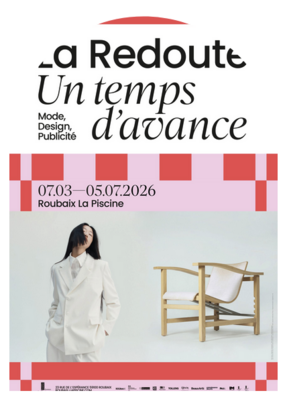
Born of the Industrial Revolution in the 19th century, the city of Roubaix forged a strong identity around textiles. La Redoute, founded in 1837 by Joseph Pollet, is above all a story of audacious entrepreneurs who settled in Roubaix. The La Piscine Museum recounts this success story, which began with a family-run spinning mill renowned for its exceptionally fine fabrics and knitwear. Over time, the company became a leader in mail-order sales in Europe before establishing itself as a major player in French e-commerce in the ready-to-wear and home decor sectors.
Exhibition — "From the Heart to the Hands: Dolce&Gabbana"
— 6 February to 14 June 2606
February 6 to June 14, 2026 Institute of Contemporary Art, Miami 23 NE 41st Street – Miami, Florida 33137
Following its resounding success in Milan, Paris, and Rome, ‘From the Heart to the Hands: Dolce&Gabbana’ arrives in Miami. An exhibition celebrating the artistic and creative legacy of Domenico Dolce and Stefano Gabbana. The exhibition journey, “From the Heart to the Hands,” is structured as a series of sections showcasing creations from Alta Moda, Alta Sartoria, and Alta Gioielleria, interwoven with a rich tapestry of cultural influences that have inspired the work of the two designers: from Italian craftsmanship and the visual arts to architecture, opera, theater, music, film, photography, and the dolce vita. The exhibition is curated by Florence Müller, with scenography by Agence Galuchat, and produced by MARI, which acquired the former IMG Arts & Entertainment division. For Miami, the show has been reimagined in dialogue with the expanded space of ICA Miami.
Exhibition — “VENUS: Valentino Garavani through the eyes of Joana Vasconcelos”
— January 29–November 29, 2026
From January 29 to November 29, 2026 At the Valentino Garavani and Giancarlo Giammetti Foundation, Piazza Mignanelli 23, Rome
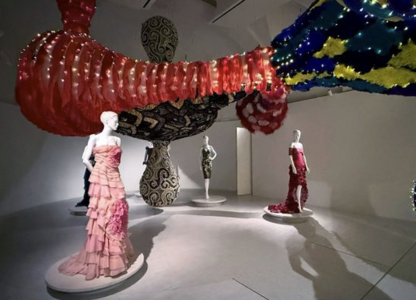
“Venus” is a major exhibition project conceived as a new chapter in the cultural vision initiated by Valentino Garavani and Giancarlo Giammetti. Through the lens of Joana Vasconcelos, the exhibition reconsiders beauty as a dynamic and transformative force. It is an immersive journey where myth, craftsmanship, and collective participation converge, redefining the role of culture within the contemporary city.
Exhibition — "Weaving, embroidering, sublimating. The skills of fashion"
— December 13, 2025 – October 18, 2026
December 13, 2025 – October 18, 2026 Palais Galliera, 10 avenue Pierre 1er de Serbie, 75116 Paris
The Palais Galliera is launching a series of exhibitions dedicated to craftsmanship. Through three successive exhibitions, which will explore the trades and techniques of fashion from different perspectives, the museum will highlight the richness of its collections and offer a fresh look at the history of fashion from the 18th century to the present day. This first exhibition focuses on the crafts of ornamentation – weaving, printing, embroidery, lace, and artificial flowers – which embellish and decorate clothing and accessories. These techniques are explored through the theme of the flower, an essential motif in textile art and fashion since the 18th century. Its many variations allow us to appreciate the interplay of materials, the treatment of colors and volumes, and the placement of motifs that it inspires throughout the seasons. From the brocaded fabric of an 18th-century waistcoat to the laser-printed Balenciaga ensemble, from Chantilly lace to Gabrielle Chanel's camellia, the exhibition highlights the wide variety of techniques, while exploring their symbolism and uses…
General Curator: Émilie Hammen, Director of the Palais Galliera Scientific Curator: Marie-Laure Gutton, Head of Accessory Collections, Samy Jelil, Curatorial Assistant, and the entire curatorial team
Exhibition — "Along the Thread of Gold: The Art of Dressing from the Orient to the Rising Sun"
— February 11 to July 6, 2025
From February 11 to July 6, 2025 At the Musée du quai Branly–Jacques Chirac, Jardin Gallery,
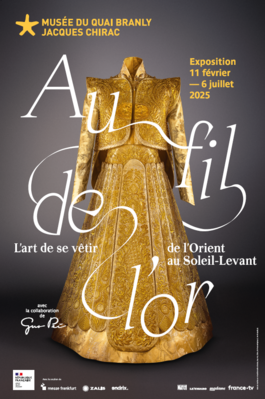
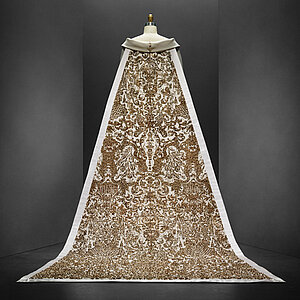
From North Africa to Japan, a fabulous journey through time and space, discovering the mysterious and fascinating origins of gold and its connection to textile arts. The most precious and noble metal in the world, an object of desire, a symbol of wealth and splendor, a sign of elegance and refinement... Discovered nearly 7,000 years ago, gold has never ceased to fascinate humankind. The quintessential material for all kinds of craftsmanship, experimentation, and tradition, it has been used since antiquity to create jewelry, adornments, and weapons. As early as the fifth millennium BCE, it embellished the first luxury fabrics reserved for powerful men. Over the following centuries, skilled weavers and artisans—Roman, Byzantine, Chinese, Persian, and then Muslim—deployed the most ingenious techniques to create true works of art, where silk or linen fibers were interwoven with gold leaf and thread… The exhibition is organized by the Musée du quai Branly – Jacques Chirac with the invaluable collaboration of the Chinese fashion designer Guo Pei.
Exhibition — "Haute dentelle"
— June 9, 2018 – January 6, 2019
June 9, 2018 – January 6, 2019 City of Lace and Fashion, Calais (France)
Following the success of monographic exhibitions dedicated to Hubert de Givenchy, Cristóbal Balenciaga, Anne Valérie Hash, and Iris van Herpen, the City of Lace and Fashion in Calais, a "Musée de France" dedicated to handmade and machine-made lace, presents "Haute Dentelle" (High Lace) from June 9, 2018, to January 6, 2019. "Haute Dentelle" offers a fresh perspective on the contemporary uses of Leavers lace by fashion designers. Exhibition curator Sylvie Marot weaves an original dialogue between lace houses and fashion houses, highlighting the creative forces behind these exchanges.
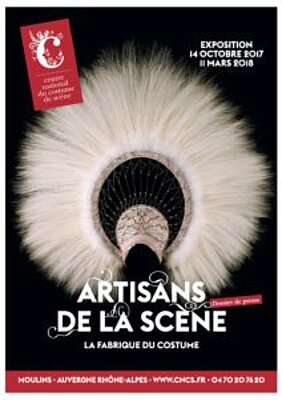
Exhibition — "Artisans of the Stage"
— October 14, 2017 – March 11, 2018
October 14, 2017 – March 11, 2018 National Center for Stage Costume, Moulins-sur-Allier (France)
Curators: Sylvie PERAULT, Delphine PINASA
With "Artisans of the Stage," the National Center for Stage Costume invites visitors to a unique exploration of the exceptional crafts that work behind the scenes of major productions. Costume designers, milliners, wigmakers, hairdressers, theatrical jewelers, feather workers, and costume makers—the exhibition reveals the extraordinary expertise, techniques, and creations of those responsible for crafting stage costumes and accessories. All the secrets of creation are unveiled through more than 200 objects: costumes, accessories, sets, videos, photographs, and prototypes from the CNCS collections, as well as from the collections of the Paris Opera, the National Library of France, the Comédie-Française, and others loaned directly by the artisans. The exhibition opens with the work of the costume designer, who creates a three-dimensional model of the costume designer's original sketch, before detailing, across 10 rooms, the various trades involved in the theatrical production chain. From head to toe, the exhibition highlights these exceptional creations: hats, wigs, masks, theatrical jewelry, feathers, costume decorations, frames, armor, and shoes. Each display case presents around twenty objects alongside films, photos, sketches, samples, and prototypes illustrating the techniques and expertise involved. A spectacular presentation concludes the exhibition, paying tribute to the profession of set designer and the workshops where sets are built. This final room foreshadows the future Center for the Interpretation of Set Design, which will open at the end of 2019 as part of the CNCS expansion project. Although these crafts are making a comeback thanks to major French luxury brands like Hermès and LVMH opening their workshops to the public, and to fashion shows by houses like Chanel focusing on the arts and crafts, these professions have not been the subject of recent studies or publications accessible to the general public. With "Artisans of the Stage," the National Center for Stage Costume (CNCS) is contributing to this renewed interest with an educational exhibition and the publication of a catalog. The crucial issue of knowledge transfer in these rare crafts is central to the exhibition, thanks to the collaboration of schools such as the National School of Arts and Techniques of Theater (ENSATT), vocational high schools, and training programs like the Diploma in Costume Design and the Greta du Spectacle (a network of adult education centers for the performing arts), which are lending their students' work to the CNCS. Subsequently, the students will be required to conduct visits and demonstrations as part of the exhibition, particularly during workshops. Finally, the exhibition will also reveal the history of these professions, some of which are disappearing or undergoing profound changes. Drawing its origins from the performing arts, and closely linked to technological advancements in these creative sectors, the exhibition will also subtly explore the social history of these activities.
Exhibition — "Behind the Scenes"
— until November 6, 2016
Until November 6, 2016 Fashion Museum, Bath (England)
Historical clothing, from the time of Jane Austen to the First World War, is presented in "Behind the Scenes," a unique exhibition. A century of women's fashion, from delicate white muslin Regency gowns to the khaki drill uniform worn for wartime work, is displayed against a backdrop of the museum's preserved collection, offering a rare "behind the scenes" glimpse into the Fashion Museum's extensive archives.
Exhibition — "Fashion in the Middle Ages"
— May 11, 2016 – January 15, 2017
May 11, 2016 – January 15, 2017 Tour Jean Sans Peur, Paris, France
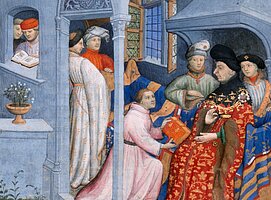
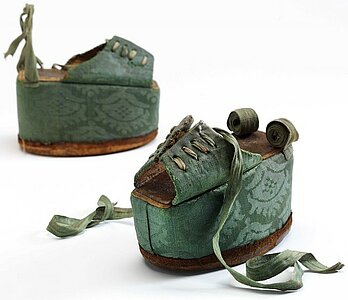
The aristocracy of the late Middle Ages spearheaded a renewal and diversification of clothing and accessories. These were the beginnings of fashion trends as we know them today. The exhibition traces the evolution of the silhouette during this period, from the tips of poulaines to the points of chaperons.
Exhibition — "Manus & Machina: Fashion in the Age of Technology"
— May 5–August 14, 2016
May 5–August 14, 2016 Costume Institute, MET, New York (USA)
The Costume Institute’s spring 2016 exhibition, presented in the museum’s Robert Lehman Wing, will explore how fashion designers reconcile handcraft and machine in the creation of haute couture and avant-garde ready-to-wear. With more than 150 ensembles dating from the early 20th century to the present day, the exhibition will address the birth of haute couture in the 19th century, the era of the invention of the sewing machine, as well as the emergence of a distinction between hand (manus) and machine (machina) in the early days of mass production. It will explore this persistent dichotomy, in which hand and machine are presented as discordant tools in the creative process, and will examine the relationship and distinction between haute couture and ready-to-wear. The galleries in the Robert Lehman Wing, located on the museum’s first and ground floors, will present a series of case studies that explore the hand/machine dichotomy. At its center will be an installation of toiles and prototypes presented as garments in progress or “monuments to the idea.” From this presentation will flow a series of rooms dedicated to traditional haute couture crafts, including embroidery, featherwork, artificial flowers, pleating, lacemaking, and leatherwork, which will be shown alongside versions incorporating innovative processes such as 3D printing, computer modeling, bonding and laminating, laser cutting, and ultrasonic welding. A room dedicated to couture and garment-making workshops will reflect the traditional division of a couture house.
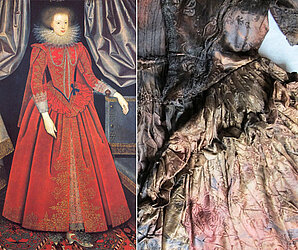
April 14–May 16, 2016 Museum Kaap Skil, Texel Island, Oudeschild (Netherlands)
The museum dedicated to the sea and beachcombers has just opened the “Wardrobe” exhibition, showcasing, until May 16, 2016, a treasure trove of items once lost at sea, including an incredible wardrobe that spent 400 years underwater.
Exhibition — "Men in Power: Men's Fashion, 1715-2015"
— April 10–August 10, 2016
April 10–August 10, 2016 LACMA, Los Angeles, USA
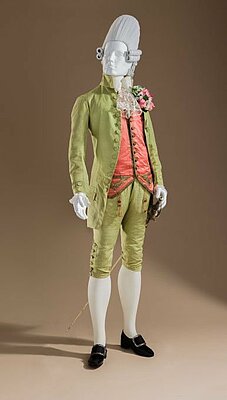
“Reigning Men: Fashion in Menswear, 1715–2015” explores the history of men’s fashion from the 18th century to the present day and challenges the all-too-common equation of “fashion” with “femininity.” From the 18th century onward, the male aristocrat wore a three-piece suit whose cut and style were remarkable, and just as sumptuous as the opulent attire of his female counterparts. In the 19th century, the “dandy” popularized a style of refined and expensive elegance that became the hallmark of Savile Row. In the mid-20th century, the “mod” reveled in the colorful and modern styles of Carnaby Street, and the 21st-century man—dressed in an ultra-chic “slim suit” by day and a floral tuxedo by night—is redefining the modern concept of masculinity. Drawing primarily on LACMA's renowned collection, "Reigning Men" draws illuminating connections between history and haute couture. The exhibition traces cultural influences across the centuries, examines how elements of uniforms profoundly shaped fashion, and reveals how cinching and padding the body was not, and is not, the sole domain of women. Featuring 200 outfits, the exhibition celebrates the rich history of restraint and grandeur in menswear.
Exhibition — "Barockissimo! Les Arts Florissants on stage"
— April 9–September 18, 2016
April 9–September 18, 2016 National Center for Stage Costume, Moulins-sur-Allier (France)
Les Arts Florissants, founded in 1979 by the Franco-American conductor William Christie, is a major player in the rediscovery of the Baroque repertoire. The enthusiasm generated by the now-historic production of Lully’s Atys at the Opéra-Comique in 1987 led Les Arts Florissants to work for three decades with leading directors such as Jean-Marie Villégier, Alfredo Arias, Pierre Barrat, Luc Bondy, Robert Carsen, Clément Hervieu-Léger, Andreas Homoki, Adrian Noble, and Pier Luigi Pizzi, as well as choreographers Francine Lancelot, Trisha Brown, Jiří Kylián, Blanca Li, José Montalvo, and Robin Orlyn. Les Arts Florissants The exhibition evokes the incredible inventiveness of Les Arts Florissants, showcasing an ever more baroque style, with nearly 150 stage costumes from various productions. It also features reproductions of set and costume models, photographs, film excerpts, all set to music! Visitors will admire both the artistry and originality of the costume designers and the audacity and adventurous spirit of Les Arts Florissants, from Louis XIV's barrel to Inca feathers and haute couture drag! The numerous performances featured in this exhibition have been staged on the most prestigious French stages: the Paris Opera, the Opéra-Comique, the Théâtre des Champs-Élysées, the Théâtre du Châtelet, the Théâtre de Caen, the Aix-en-Provence International Festival, as well as at other renowned festivals and also in Vienna, Madrid, and New York. They attest to the fruitful partnership between these major institutions and Les Arts Florissants, and to the meticulous care they took in the conception and execution of the productions, in a spirit of continuous innovation, bringing together all the professions contributing to the performing arts. The visual signature of each production—its sets, its costumes, sometimes enhanced by video—confirms this wealth of perspectives that will be revealed in the exhibition. Les Arts Florissants: An ensemble of singers and instrumentalists dedicated to Baroque music, faithful to performance on period instruments, Les Arts Florissants is one of the most renowned ensembles in the world in its field. William Christie is its founding music director and has entrusted the British tenor Paul Agnew with the role of deputy music director and associate conductor. Since 2015, Les Arts Florissants has been in residence at the Philharmonie de Paris. Since Lully's Atys at the Opéra-Comique in 1987, triumphantly recreated in May 2011, the operatic stage has ensured them numerous successes with Rameau (Les Indes galantes, Hippolyte et Aricie), Lully and Charpentier (Médée, David et Jonathas) as well as with Handel (Orlando, Alcina, Hercules), Purcell (King Arthur, Dido and Aeneas, The Fairy Queen), Mozart (Die Zauberflöte, Die Entführung aus dem Serail), or even with Monteverdi's operatic trilogy, as well as with more rarely performed composers, Landi (Il Sant’Alessio), Cesti (Il Tito), Campra (Les Fêtes Vénitiennes) or Hérold (Zampa).
Exhibition — "Fashion Forward. Three Centuries of Fashion (1715-2016)"
— April 7–August 14, 2016
April 7–August 14, 2016 Musée des Arts Décoratifs, Paris, France
The Musée des Arts Décoratifs celebrates the 30th anniversary of its fashion collection from April 7 to August 14, 2016. This is an opportunity to respond to a strong public demand: to finally have the chance to explore the history of fashion over several centuries. It is also an opportunity to highlight its strengths and its unique characteristics: a national collection of fashion and textiles housed within the museum in dialogue with the other departments of the Musée des Arts Décoratifs, a museum of all kinds of objects. The exhibition brings together 300 pieces of women's, men's, and children's fashion from the 18th century to the present day, drawn from its collection and assembled to create a unique chronological timeline.
Exhibition — "Hautes-à-Porter"
— April 2–September 11, 2016
April 2–September 11, 2016 Fashion Museum Hasselt (Belgium)
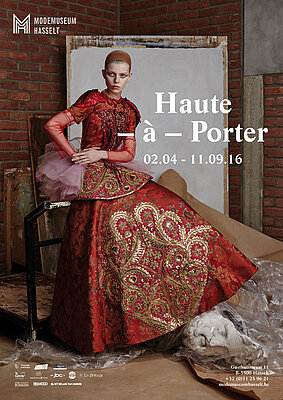
Curated by internationally renowned designer, journalist, and photographer Filep Motwary, this exhibition explores the concept of haute couture, typically associated with craftsmanship, luxury, extravagance, and spectacle. But aren't these also characteristics of ready-to-wear today? The exhibition delves into this question, examining the evolving relationship between haute couture and ready-to-wear, as well as their mutual enrichment. Through various themes and a spectacular selection of silhouettes and accessories from leading designers and their equally celebrated fashion houses, the exhibition highlights the influence of haute couture on everyday fashion. Accompanied by photographs, films, artworks, and music, the Haute-à-Porter exhibition will offer a unique perspective on fashion over the past 30 years.
Exhibition — "A History of Fashion"
— April 1–November 20, 2016
April 1–November 20, 2016 Souvigny Museum, Place Aristide Briand, 03210 Souvigny Open daily except Tuesdays and Sunday mornings, from 9:00 a.m. to 12:00 p.m. and from 2:00 p.m. to 6:00 p.m.
Open daily from June to September.
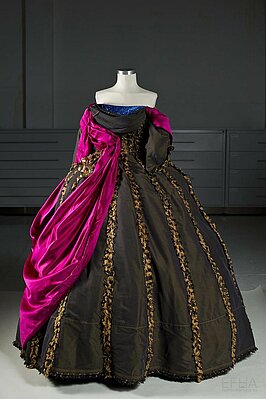
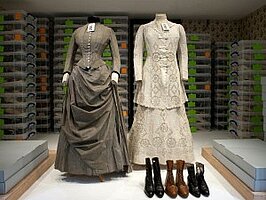
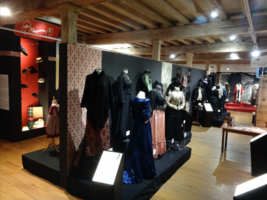
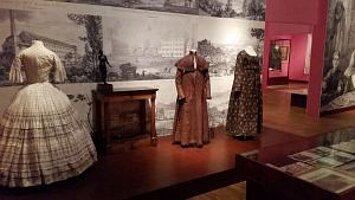
A new exhibition is on display at the Souvigny Municipal Museum. Entitled "A History of Fashion," this exhibition addresses a fundamental question: how did fashion reflect the upheavals in French society from 1850 to 1950? "A History of Fashion" presents the evolution of dress codes, from the corset to the straight-cut suit of the 1950s, from the crinoline to trousers. More than one hundred outfits and numerous accessories have been brought together. Boots, parasols, hats, furs, and handbags were selected by the Souvigny Museum thanks to donations from the Société d’Émulation du Bourbonnais and the Association du Costume à travers les âges in Molinet (03). Featuring an original scenography, the visit follows a playful path between reproductions of boutiques and a catwalk showcasing bustle dresses, Charleston dresses, leg-of-mutton sleeves, and even a unique piece by André Courrèges. The boutiques offer scenes highlighting the emergence of department stores such as Le Bon Marché, founded by Aristide Boucicaut in 1852 in Paris, and the Nouvelles Galeries, established in Moulins in 1914. This 2016 exhibition showcases the evolution of fashion from its origins in the 19th century to the 1950s. Visitors can admire crinoline dresses, the first true fashion phenomenon imposed by Parisian Haute Couture. Haute Couture subsequently influenced fashion worldwide, as well as, more locally, regional costumes. Contrary to popular belief, rural populations also adopted various fashions. The traditional costume of the Bourbonnais region gradually became more of a tourist symbol than everyday clothing. Society became increasingly uniform, a phenomenon exacerbated by the Industrial Revolution and the mechanization of production. The spread of women's magazines also played a significant role in these changes. Newspaper front pages illustrate the influence of Paris on the provinces and the dissemination of clothing styles. Fashion is a "total social fact" that imposes aesthetic norms, particularly on women's clothing. "A History of Fashion" invites visitors to observe the evolution of shapes, designs, and silhouettes. Characteristic outfits are highlighted, such as the S-shaped silhouette, the tube dress, and the corolla shape of Christian Dior's New Look. Numerous objects, photographs, reconstructions of fashion catalogs, and film archives immerse visitors and tourists in the era of Zola's *The Ladies' Paradise*. Children and adults alike can also try their hand at being stylists for a day, designing outfits on paper or mannequins. The exhibition also explores the emergence of leisure activities in the daily lives of the French. Swimsuits, golf attire, and the first bicycle from Moulins attest to this evolution. Ceremonial attire underscores the symbolic dimension of clothing. Numerous wedding dresses, as well as photographs and accessories (for baptisms, communions, and funerals), bring the atmosphere of traditional ceremonies to life for visitors. Finally, the exhibition aims to reflect on our society and the gap that sometimes exists between the image it projects through clothing and the reality of ways of thinking. Fashion liberates women's movements, but customs do not necessarily evolve at the same pace. A documentary filmed in 1967 gives a voice to young people from Moulins and describes the limits of female emancipation and a parity that was far from being accepted. "A History of Fashion" allows us to grasp the context of the years 1850-1950 as well as the mentalities and representations that accompanied them. Ultimately, the exhibition offers a national and local perspective on the evolution of clothing and presents visitors with a mosaic of memories.
Image source: Moulins Tourist Office. CC BY license.
Exhibition — "The Pioneers. Reinventing the 20th Century Silhouette"
— March 18–August 14, 2016
March 18–August 14, 2016 MoMu, Antwerp (Belgium)
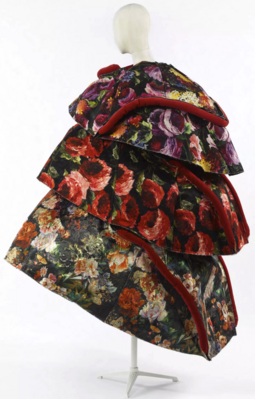
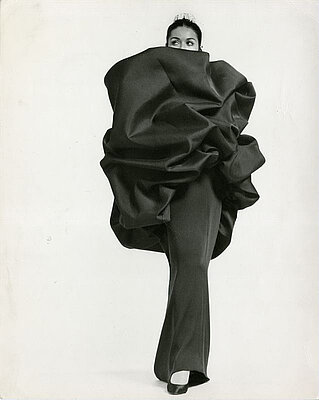
The exhibition Game Changers – Reinventing the 20th Century Silhouette explores the avant-garde work of couturier Cristóbal Balenciaga. His innovative mid-20th-century designs gave rise to a new silhouette, embracing the body and creating architectural volumes. Along with pioneers of the 1920s and 30s, and later, designers of the 1980s and 90s, he created an alternative to the then-prevalent hourglass figure. This group of “game changers” viewed 20th-century fashion with a fresh perspective. Japanese influences, such as the kimono, liberated women from their corsets in the early 20th century. Fashion designers such as Madeleine Vionnet, Paul Poiret, and Coco Chanel, in the 1920s and 30s, each in their own way, gave shape to this freedom, both through their technical innovations and their modern ideas about femininity. At the end of the 20th century, the boundaries of the female silhouette were further explored by Japanese and Belgian designers such as Issey Miyake, Yohji Yamamoto, Comme des Garçons, Ann Demeulemeester, and Martin Margiela. They introduced new shapes and contours of the body and a new meaning to what can be considered fashion. The Basque fashion designer Cristóbal Balenciaga (1895–1972), a key figure and architect of the renewal between these two periods, occupies a central place in the exhibition. His designs and works are prominently featured. The other designers presented developed similar radical ideas, each in their own way, and pushed the boundaries of the classic female silhouette. Fashion is thus more than a series of trends; it becomes a way of shaping the body, space, and movement. Rei Kawakubo's 1997 collection, Body Meets Dress, Dress Meets Body, demonstrates how this new language of form has become an integral part of the fashion scene. “Haute Couture is a grand orchestra that only Balenciaga knows how to conduct; all the other designers we are simply follow his directions.” – Christian Dior The exhibition brings together 100 unique couture and ready-to-wear silhouettes by designers including Cristóbal Balenciaga, Paul Poiret, Madeleine Vionnet, and Gabrielle Chanel, as well as Issey Miyake, Ann Demeulemeester, Comme des Garçons, Yohji Yamamoto, and Maison Martin Margiela. MoMu collaborates with prestigious institutions such as the Museum of the Fashion Institute of Technology in New York, the V&A, MUDE Lisbon, and the Galliera Museum.
Exhibition — "The Male Silhouette: Fashion and Artifice from the Middle Ages to Today"
— March 10, 2016 – February 26, 2017
March 10, 2016 – February 26, 2017 Switzerland: 12 Museums United by a Shared Program
The Bourgeois Gentleman in Watchmaking Country > Underground Mills of Col-des-Roches Workwear and Overalls > Travers Asphalt Mines Oriental Style > Rousseau Museum Portraits of Watchmakers Under the Magnifying Glass > Val-de-Travers Regional Museum Oscar's Imaginary Era > Regional Museum, La Sagne Dandy Spirit > Swiss Fashion Museum The Pinned Man > Neuchâtel Public and University Library The Prestige of the Uniform > La Béroche Museum Fashionable Automata? > Neuchâtel Museum of Art and History The Real Man in the 20th Century > La Chaux-de-Fonds Peasant and Craft Museum Clothes Make the Man! Town Hall Museum -> Le Landeron Between Armor and Lace > Valangin Castle and Museum
Exhibition — "From Gothic to Goth: Fashion in the Romantic Era and its Legacy"
— March 5–July 10, 2016
March 5–July 10, 2016 Wadsworth Atheneum Art Museum, Hartford, Oregon
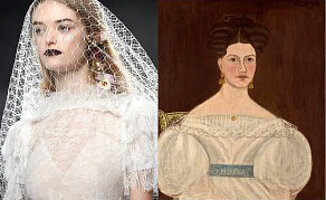
“Gothic to Goth: Romantic Era Fashion & Its Legacy” is the first exhibition to explore the Romantic era in depth as a foundational period in the history of costume. Presenting historical garments alongside literary works, paintings, prints, and decorative arts, the exhibition examines how European fashions of the medieval, Renaissance, and Baroque periods influenced and inspired new styles created between 1810 and 1860. “Gothic to Goth” illustrates how early 19th-century costume—like the fine arts, decorative arts, architecture, interior design, literature, and music—moved away from the order and rationality of the previous half-century to embrace imagination and emotion, originality and vision, as well as individuality and subjectivity as guiding principles. The exhibition concludes with an overview of recent Gothic and Steampunk fashions, revealing their roots in the rich imagination and aesthetics of Romanticism. Lynne Z. Bassett, a costume and textile historian and museum consultant, is the exhibition's curator.
Image Source: Rodarte Fall 2016 ready-to-wear; Samuel Addison Shute and Ruth Whittier Shute, “Woman in Robert’s Chair” (1833). Author: Marcus Tondo / Author: Wadsworth Athenaeum Museum of Art. Source: Vogue US
February 20–May 15, 2016 Rijksmuseum, Amsterdam (Netherlands)
In the six rooms of the Philips Wing, the Rijksmuseum presents Dutch fashion from 1625 to 1960, from February 20 to May 15, 2016. From garments of the Frisian branch of the House of Nassau, straight out of the Dutch Golden Age, to colorful silk gowns from France and shimmering velvets worn by 18th-century men, by way of the classical Empire style and the tails of the Fin de Siècle, not forgetting 20th-century haute couture by Dior and Yves Saint Laurent. Bianca du Mortier, Chief Curator of the Museum's Costume Collection: “Through these garments, this exhibition tells the stories of the people who wore these creations. In the world of fashion, everything revolves around the choices of the person wearing a particular outfit, which make them a pioneer or an imitator.” And it has always been this way – even today – the wealthiest and most powerful people carry a message, consciously or unconsciously, through their clothing. Nothing has changed in this regard over the past 330 years. These choices are dictated by various factors: the available budget, the climate, the occasion, a person's age, social standing, posture, personal preferences, and so on. And for the presentation of a fashion collection in the museum, a choice was once again made: the Rijksmuseum. The renowned photographer Erwin Olaf was responsible for the design. Erwin Olaf: “The exciting and prestigious commission I received from the most exceptional museum in the Netherlands – to design and shape the Catwalk exhibition – came at just the right time.” For some years now, I've been looking for another way to present my photographic work and combine it with installations, sound effects, and short films. The visitor is thus transported into a world where they are encouraged and invited to give free rein to their imagination, ultimately creating an inspiring dialogue between themselves and the artwork on display.
Exhibition — "Wearable Treasures: Jewelry and Adornments from the Maghreb"
— February 11–August 28, 2016
February 11–August 28, 2016 Arab World Institute, Paris
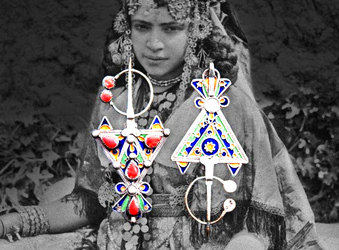
This exhibition explores the world of women's adornment through jewelry from the Maghreb, presented here for the first time thanks to the Bouvier Collection. These jewels, crafted from precious metals—gold, silver, and gilded silver—produced and distributed in both urban and rural settings, span a period from the second half of the 19th century to the first half of the 20th century. Used for both special occasions and everyday wear, they reveal the inventiveness and expertise of the artisans and individuals who created them. The women's adornments of Morocco, Algeria, and Tunisia are distinguished by a rich collection: headpieces, temple ornaments, earrings, necklaces, fibulae, bracelets, and anklets, which serve a utilitarian, ornamental, and protective function. The variety of their forms, decorations, and techniques reflects the diversity of the peoples and the distinct identities of the regions that make up the Arab world today.
Exhibition — "Infinite Lace"
— January 16–December 31, 2016
January 16–December 31, 2016 International City of Lace and Fashion, Calais
New Exhibition at the Contemporary Gallery: CREATIONS FROM ENSAD-PARIS & SOPHIE HALLETTE Committed to showcasing emerging talent, the City of Lace and Fashion annually renews its exhibition dedicated to new uses of lace. In 2016, it presents the result of a partnership between Maison Sophie Hallette, a manufacturer of Calais-Caudry® lace, and students from the École nationale supérieure des Arts Décoratifs (Ensad Paris). How do these designers take on the given theme and explore it at the intersection of fashion and visual arts? Developed through a three-week workshop, their creations blend techniques (weaving, printing, etc.), materials, graphic design, and colors to explore the aesthetic and material qualities of this exceptional textile. The object of desire, once again, when lace inspires, magic happens. Infinite lace.
Exhibition — "A house, collections"
— December 16, 2015 – March 6, 2016
December 16, 2015 – March 6, 2016 Christian Dior Museum, Granville, France
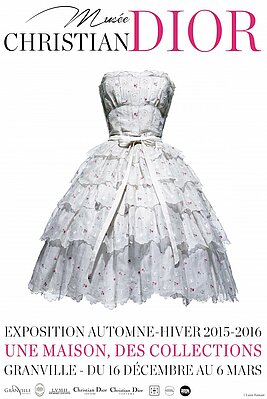
The Christian Dior Museum, the only museum in France dedicated to a fashion designer, is owned by the City of Granville and designated a "Maison des Illustres" (House of the Illustrious) in 2012. Since 2010, after the summer season, it has presented an Autumn-Winter exhibition: "A House, Collections." This exhibition showcases the collections held in Granville, acquired and restored by the Présence de Christian Dior association since the museum's founding in 1997. The presentation is updated annually to allow visitors to discover the richness of the collection while preserving the textiles. The "A House, Collections" exhibition offers a fresh perspective on Christian Dior's sources of inspiration and creations. The first part of the exhibition focuses on his childhood, the elegant outfits of his mother Madeleine, and the Carnival costumes that inspired him. An immersive experience in the life of the great couturier at 30 Avenue Montaigne in Paris offers a glimpse into the lives of his most loyal collaborators, such as his friend, fabric designer Andrée Brossin de Méré, and the embroiderer Rébé. A selection of designs created by the House of Dior between 1947 and 1957 reveals the spirit of haute couture creations initiated by Christian Dior and perpetuated by his successors, from Yves Saint Laurent to Raf Simons. Loans from the Museum of Art and History and the Granville Media Library (Heritage Collection), as well as from Christian Dior Couture, enrich the presentation in this house where Christian Dior took his first steps.
Image Source: Author: Christian Dior Museum. CC BY License
Exhibition — "Fly, Sail, Travel – Louis Vuitton"
— December 4, 2015 – February 21, 2016
December 4, 2015 – February 21, 2016 Grand Palais, Paris, France
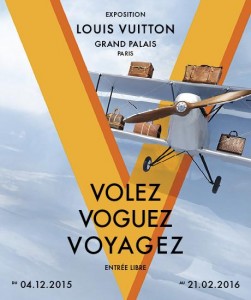
Louis Vuitton presents “Volez, Voguez, Voyagez – Louis Vuitton” at the Grand Palais from December 4, 2015, to February 21, 2016. Curated by Olivier Saillard, the exhibition traces the history of the House of Louis Vuitton from 1854 to the present day, through portraits of its founders as well as those who are shaping the Louis Vuitton of tomorrow. The Grand Palais was built in 1900 for one of the most spectacular World's Fairs, the Paris Exposition, which welcomed 48 million visitors. At the dawn of a new century, Georges Vuitton was in charge of the “Travel Goods and Leather Goods” section. The Louis Vuitton stand then stood out in the unexpected form of a carousel, becoming the center of attention and showcasing the House's most innovative and elegant luggage and bags. Structured around nine chapters, this thematic journey, conceived and designed by Robert Carsen, opens with the House's quintessential symbol: an antique trunk, the epitome of modernity, embodying the iconic codes and audacious spirit of Louis Vuitton ahead of its time. The exhibition features objects and documents from the Louis Vuitton Heritage collection, as well as a selection of pieces on loan from the Palais Galliera, the City of Paris Fashion Museum. A room dedicated to craftsmanship concludes the exhibition.
General Curator: Olivier Saillard Artistic Direction and Scenography: Robert Carsen
Exhibition — "The Journey of an Elegant Woman"
— November 20, 2015–May 1, 2016
November 20, 2015 – May 1, 2016 Quebec City Costume and Textile Museum, Montreal
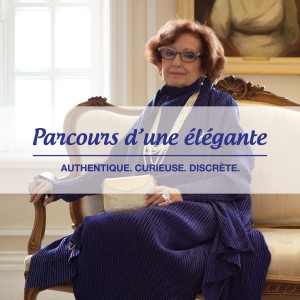
“A Woman’s Journey of Style” explores, through a unique and unconventional experience, the various fashion trends that influenced the personal style of an exceptional woman. For several years, this generous donor has gifted the museum with over 550 inspiring garments and accessories. The exhibition brings together 300 artifacts, composing a range of refined ensembles that reflect her unique and alluring image. Purchased from luxury boutiques or secondhand shops, handmade or crafted in specialized workshops, each piece on display tells a story—that of a truly elegant, inquisitive, and discreet woman.
Image Source: Author: Montreal Fashion Museum. CC BY License
Exhibition — "Jacqueline de Ribes. The Art of Style"
— November 19, 2015 – February 11, 2016
November 19, 2015 – February 21, 2016 Metropolitan Museum of Art, NY
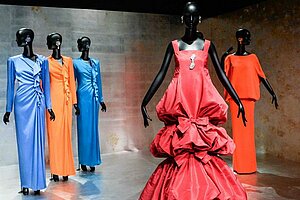
This Costume Institute exhibition is dedicated to Countess Jacqueline de Ribes, an internationally renowned style icon whose originality and elegance made her one of the most celebrated figures in 20th-century fashion. This thematic exhibition features approximately 60 haute couture and ready-to-wear outfits drawn primarily from Jacqueline de Ribes’s personal archives, dating from 1962 to the present. It also includes her creations for costume balls, which she often produced by cutting up and repurposing her haute couture gowns to create nuanced expressions of her aesthetic. These pieces, accompanied by photographs, videos, and ephemeral objects, tell the story of the evolution of her interest in fashion over the decades, from the “dress-ups” of her childhood to the very embodiment of the International Style. A muse to haute couture designers, de Ribes had their drapers, cutters, and tailors at her disposal, in recognition of the esteem they held for her taste and originality. She eventually put this talent and experience to use in her own design company, which she ran from 1982 to 1995. While the exhibition emphasizes her taste and style, extensive documentation from her personal archives illustrates the breadth of her professional life, including her roles as a theater impresario, television producer, interior designer, and director and organizer of international charitable events.
Exhibition — "Women's Stories: Women in Textiles from the Second Half of the 18th Century to the Present Day"
— November 6, 2015 – October 9, 2016
November 6, 2015 – October 9, 2016 Museum of Printed Textiles, Mulhouse (France)
Textiles tell the story of the evolution of women's lives. The exhibition presents the stories of these women—fashion icons, emblematic figures, renowned artists—whose lives were sometimes tragically cut short, yet who have shaped the history of textiles. Confined to the roles of wife and mother, women's work remained largely in the shadows for a long time. Agriculture, crafts, commerce… They represented free labor for their husbands, whom they assisted in their daily tasks. In the 18th century, the production of printed fabrics quickly brought this female workforce to the forefront and made their work visible. With the establishment of the first factories, the employment of women, a large and inexpensive workforce, became commonplace. In the 19th century, industrialization necessitated the mass employment of women, who took on traditionally male tasks, a process made possible by mechanization. Later, in the 20th century, they would achieve the status of designers, some even going on to create companies that would make them famous.
Exhibition — "The Grand Royal Robes of Lamyne M."
— October 9, 2015 – June 10, 2016
October 9, 2015 – June 10, 2016 Basilica of Saint-Denis, Saint-Denis (France)
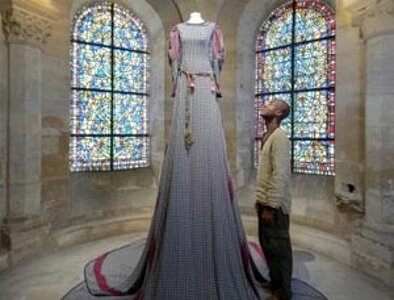
The three-meter-high “giant dresses” are on display in the chapels of the crypt of the Basilica of Saint-Denis. They are inspired by the robes worn by the recumbent effigies of queens and princesses buried in the royal necropolis. A total of thirteen dresses were created. Eight are presented in the heart of the national monument, while the other five are displayed in various locations throughout the city of Saint-Denis. Conducted in partnership with students from the La Source vocational high school (Nogent-sur-Marne) and women from the Floréal community center in Saint-Denis, this exhibition is the culmination of a collaborative project. Inspired by the recumbent effigies of French queens and princesses housed in the Basilica of Saint-Denis, fashion designer LAMYNE M. conceived these gowns as a tribute to the beauty of princesses, the grandeur of women, and the city of Saint-Denis and its 124 nationalities, LAMYNE M.'s adopted city. Transcending time and space, LAMYNE M.'s Grand Royal Gowns forge a connection, an unusual complicity: between medieval structure and contemporary texture, between a thousand-year-old sanctuary and a city of tomorrow, between the quintessence of power and the strength of its people.
Exhibition — "Angelin Preljocaj, dance costumes"
— October 3, 2015 – March 6, 2016
October 3, 2015 – March 6, 2016 CNCS, Moulins-sur-Allier (France)
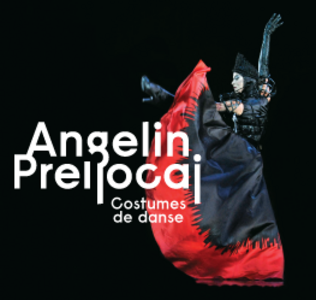
The CNCS (National Center for Stage Costume) has given Angelin Preljocaj carte blanche to celebrate the 30th anniversary of his company with a major exhibition: Angelin Preljocaj, Dance Costumes. The exhibition: a typology of collaborations. The CNCS wished to celebrate the 30th anniversary of Ballet Preljocaj with a unique exhibition offering a journey through the choreographer's most iconic ballets, conceived by Constance Guisset. A true common thread running through his various creations, the numerous artistic collaborations with writers, illustrators, visual artists, composers and musicians, fashion designers, and video artists will serve as the exhibition's central theme, notably through: Haute couture: Snow White, costumes by Jean Paul Gaultier; The Nights, costumes by Azzedine Alaïa; Parade and The Park, costumes by Hervé Pierre… Visual arts: Romeo and Juliet, sets and costumes by Enki Bilal; Parade, sets by Aki Kuroda; The Four Seasons…, set design by Fabrice Hyber; Siddhartha, set design by Claude Lévêque; The Nights, set design by Constance Guisset… Music: Helikopter (Sonntags Abschied), music by Karlheinz Stockhausen; The Nights, Natacha Atlas; A Thousand Years of Calm, Laurent Garnier… An exhibition enhanced by videos on a large screen. Each display case showcases a ballet by Angelin Preljocaj, presented on a large screen alongside the costumes featured in the ballet. The exhibition benefits from a significant audiovisual component, as in addition to his choreographic creations, Angelin Preljocaj directs or collaborates with several directors: Snow White in 2009, Black Pavilion with Pierre Coulibeuf in 2006, Eldorado / Preljocaj with Olivier Assayas in 2007, and others. He also directed the Air France commercial L’Envol, which incorporates the choreography from Le Parc (2011). A wealth of costumes, filmed interviews, ballet excerpts, and photographs, revealing the creativity of Angelin Preljocaj’s three-decade career, complete this unique experience.
Exhibition — "Shoes: Pleasure and Pain"
— June 13, 2015 – January 31, 2016
June 13, 2015 – January 31, 2016 Victoria and Albert Museum, London
This exhibition explores the extremes of footwear across the globe, showcasing some 200 pairs of shoes, ranging from a sandal decorated with pure gold leaf from ancient Egypt to the most sophisticated creations by contemporary designers. It explores the cultural significance and transformative power of shoes and examines the latest technological advancements in footwear design, which allow for ever-higher heels and dramatic shapes. Examples from celebrities and collectors are presented alongside a dazzling array of historical footwear, many of which have never been exhibited before.
Exhibition — “Graven Fashion”
— since December 15, 2014
Since December 15, 2014 Grévin Museum, Paris (France)
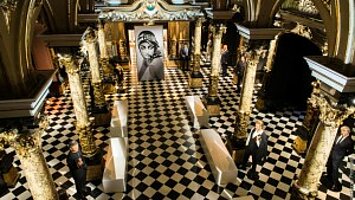
The new "Grévin Fashion" universe is housed in a restored and enhanced heritage setting, successfully presenting a contemporary and minimalist scenography that magnifies both the splendid interior architecture of the dome and the Hall of Columns while completely modernizing the space. Leading names in French and international fashion welcome you to this new space: Ines de La Fressange, Chantal Thomas, Jean-Paul Gaultier, Cara Delevingne, Coco Rocha, and Naomi Campbell. These new black and white sets, created by Dick Walsh and Julien Bertevas, incorporate large-scale art photographs, a film by Ali Mahdavi, and immense mirrors that infinitely multiply the Hall of Columns. This artistic and contemporary universe reinforces the timeless and unique character of fashion in Paris. The Hall of Columns becomes the setting for an imminent fashion show, which numerous personalities from the worlds of film, entertainment, and fashion are preparing to attend. On either side, iconic figures such as Madame de Pompadour, Charlie Chaplin, and Mozart participate in a quirky illusion, perfectly illustrating Grévin's art of realism. A highly graphic projection mapping, custom-designed for Grévin by SKERTZO, adds even more magic to the space and offers visitors another moment of wonder. Just one more reason to say that Grévin is truly a must-see Parisian destination.
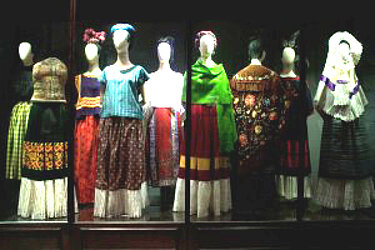
Exhibition — "Appearances are deceiving: Frida Kahlo's dresses"
— November 22, 2012 – December 2016
November 22, 2012–December 2016 Frida Kahlo Museum, Mexico City
+ May 14–July 12: Frida by Miyako Ishiuchi, Michael Hoppen Gallery, London
The exhibition "Appearances Are Deceiving: Frida Kahlo's Dresses" is the first exhibition at the Frida Kahlo Museum in Mexico City dedicated to the artist's wardrobe. This exhibition offers a new interpretation of Frida Kahlo through her wardrobe, discovered in 2004 in the artist's bathroom. The central theme of the exhibition explores the artist's identity, expressed through the striking visual image she constructed from the clothes she chose to wear. Much has been said about love as a driving force and Frida's political convictions as influences on her choice to wear ethnic clothing. "Appearances Are Deceiving: Frida Kahlo's Dresses" presents tradition and disability as two new elements that informed the painter's decision to wear traditional clothing. The discovery of Kahlo's clothing brought her wardrobe to the forefront of the contemporary fashion debate, as Frida's style inspired international designers such as Ricardo Tisci and Jean Paul Gaultier, the latter even drawing inspiration from Kahlo for his Spring/Summer 1998 collection entitled "Homage to Frida Kahlo." The artist remains a source of inspiration for these designers, bridging the gap between past and present.